Journal of Modern Physics
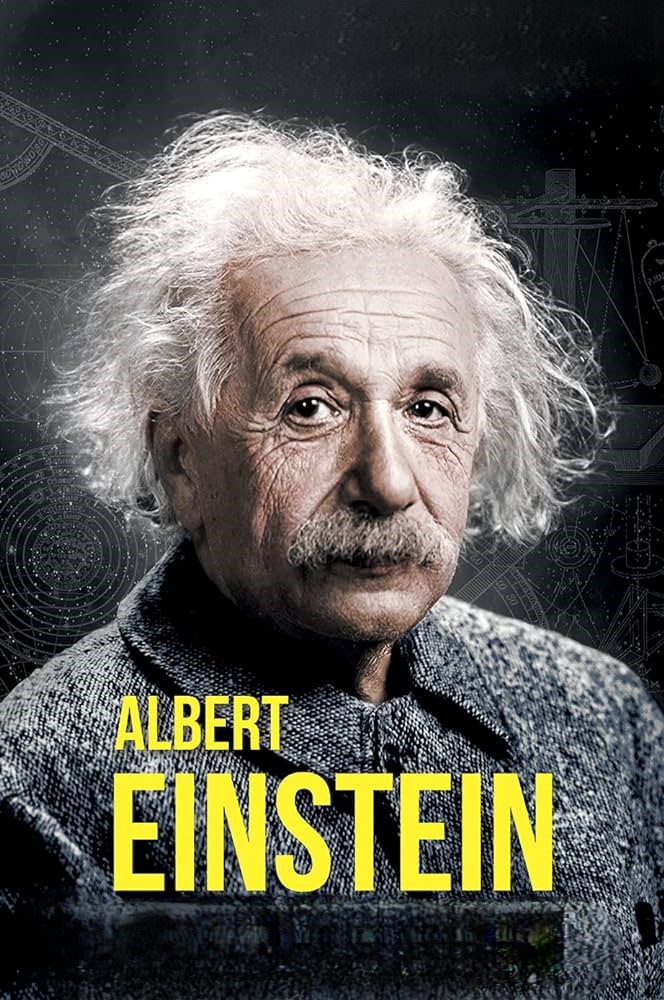
Albert Einstein and the Birth of Quantum Science
From relativity to the quantum debate
 UtahQuantum.org Editorial TeamMarch 12, 2026Research Edition
Einstein opened a new way of thinking about the universe. Through relativity and the photoelectric effect, he helped redefine the nature of light, energy, and reality itself.
"The important thing is not to stop questioning."
Entries
Einstein's Notebook Entries
The patent clerk who changed physics
Albert Einstein was born in Ulm, Germany, in 1879. As a young student he showed a deep curiosity about the nature of light and motion, questions that would later redefine modern physics.
While working as a patent clerk in Bern, Einstein used his spare hours to explore theoretical ideas that many established physicists had overlooked.
The miracle year of 1905
In 1905 Einstein published four revolutionary papers that reshaped physics. These papers explained the photoelectric effect, Brownian motion, and introduced special relativity.
The photoelectric effect was particularly important because it suggested that light behaved as discrete packets of energy, later called photons.
Relativity and the structure of reality
Einstein's theory of relativity revealed that space and time were not fixed frameworks but flexible structures dependent on motion and gravity.
His famous equation E = mc^2 showed that mass and energy were interchangeable, linking matter to energy at a fundamental level.
Einstein and the quantum debate
Although Einstein helped launch quantum science through the photoelectric effect, he remained skeptical about its probabilistic interpretation.
His debates with Niels Bohr about quantum mechanics became some of the most famous scientific discussions of the twentieth century.
Quantum echoes
Einstein's influence on quantum science
Light quanta
Einstein's explanation of the photoelectric effect proposed that light behaves as discrete packets of energy.
Energy-mass relation
The equation E = mc^2 demonstrated the deep connection between matter and energy.
Quantum debate
Einstein's critiques of quantum mechanics helped shape the philosophical foundations of quantum theory.
Photoelectric effect
Einstein showed that electrons are emitted from metals when struck by light, a discovery that confirmed the particle nature of light and earned him the 1921 Nobel Prize in Physics.
Quantum entanglement
Einstein described entanglement as 'spooky action at a distance,' highlighting the strange correlations that can exist between particles separated by space.
EPR paradox
The Einstein-Podolsky-Rosen thought experiment challenged the completeness of quantum mechanics and later inspired modern research in quantum information and quantum computing.
Utah Quantum honors Albert Einstein for shaping the foundations of modern physics and influencing the development of quantum science.