Journal of Atomic Studies
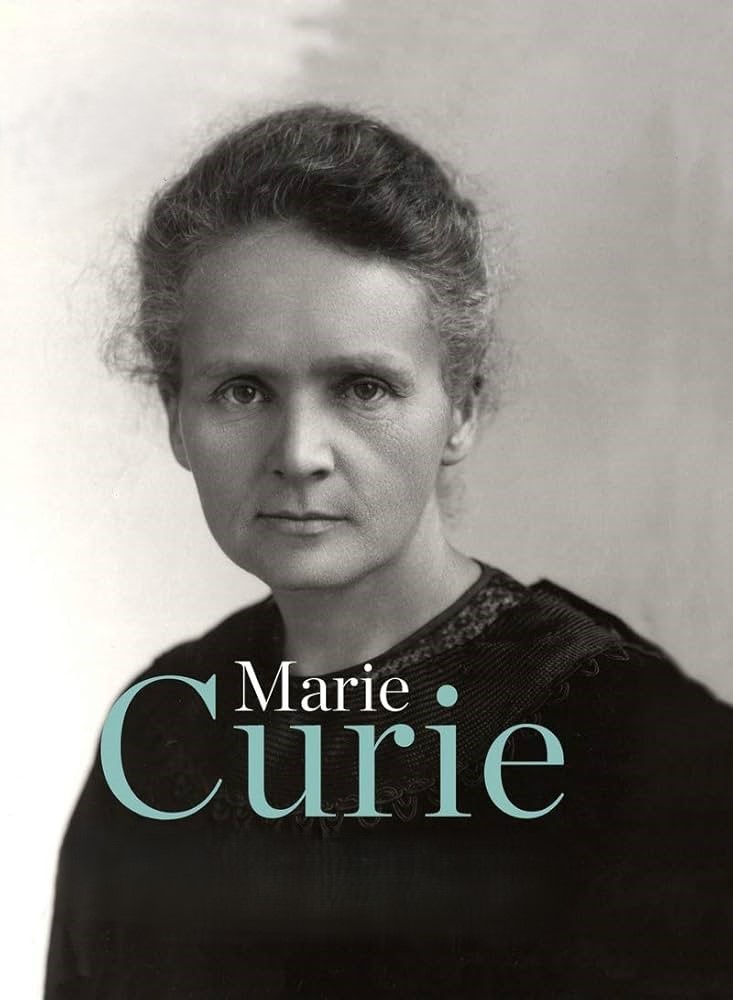
Marie Curie and the Quantum Revolution
From radioactivity to the deeper logic of the quantum age
 utahquantum.org Editorial TeamMarch 10, 2026Journal Edition
As you read this as a notebook rather than a newspaper, Curie's story will become even clearer: she opened the atom, and once the atom was open, modern physics could never return to its earlier certainty.
The path to quantum science was not a single theory. It was a long surrender of old assumptions.
Margin note
Curie did not invent quantum mechanics, but her evidence made the old atomic worldview harder to defend.
The young scholar who crossed into modern science
Marie Curie was born in Warsaw in 1867, in a world where education demanded sacrifice and where scientific ambition did not easily welcome women. When she moved to Paris to study physics and mathematics, she entered not only a new city but a new scientific century.
Her rise was built through exacting work, disciplined observation, and a refusal to accept the limits imposed around her. That seriousness would become essential once she began investigating the strange behavior of radioactive matter.
Radium, polonium, and the collapse of old certainty
Curie’s discovery of polonium and radium changed atomic science because it revealed that matter was not calm, sealed, and indivisible. Atoms could emit energy. They could transform. They carried within them a hidden drama.
That single realization disturbed the confidence of classical physics. If the atom was active and unstable, then the small-scale structure of nature required new laws, new models, and eventually a new language of explanation.
The road from radioactivity to quantum thought
Curie did not formulate quantum mechanics herself. Her role was more experimental and therefore more catalytic. She helped create the evidence that made older assumptions impossible to maintain.
Later physicists such as Max Planck, Albert Einstein, and Niels Bohr would build the theories that defined the quantum age. But the intellectual pressure that fed those theories was strengthened by Curie’s work on atomic behavior and radioactive change.
Why her legacy still belongs in the quantum era
Modern quantum computing, sensing, communication, and imaging all depend on a refined understanding of matter at atomic and subatomic scales. Curie’s discoveries helped make that scale scientifically unavoidable.
Her legacy is therefore not confined to the laboratory of her own time. It extends into the present, where the smallest units of nature continue to shape the most ambitious technologies of the future.
Quantum echoes
Why this story belongs to quantum history
Atomic instability
Curie helped show that atoms were not final, indivisible units but active systems with internal change.
Energy at small scales
Radioactivity made energy release inside matter impossible to ignore, preparing the ground for quantum-era thinking.
Theory follows evidence
Planck, Einstein, and Bohr built quantum theory after experiments like Curie’s had already broken classical certainty.
Quantum inheritance
What Curie passed forward
- A new understanding that atoms are active systems.
- A scientific basis for thinking about energy release at microscopic scales.
- An experimental legacy that helped prepare the ground for quantum theory.
- A continuing influence on physics, chemistry, medicine, and quantum technology.
Interesting Fact
A popular myth says Madam Curie’s body had to be sealed because it was radioactive. In reality, when her remains were moved to the Panthéon in Paris, her coffin was placed inside a lead-lined tomb as a safety precaution.
Fact Check: Her body itself was not dangerously radioactive; the protection was mainly precautionary.
Utah Quantum salutes Madam Curie for her pioneering contributions that laid the foundations of modern quantum science.